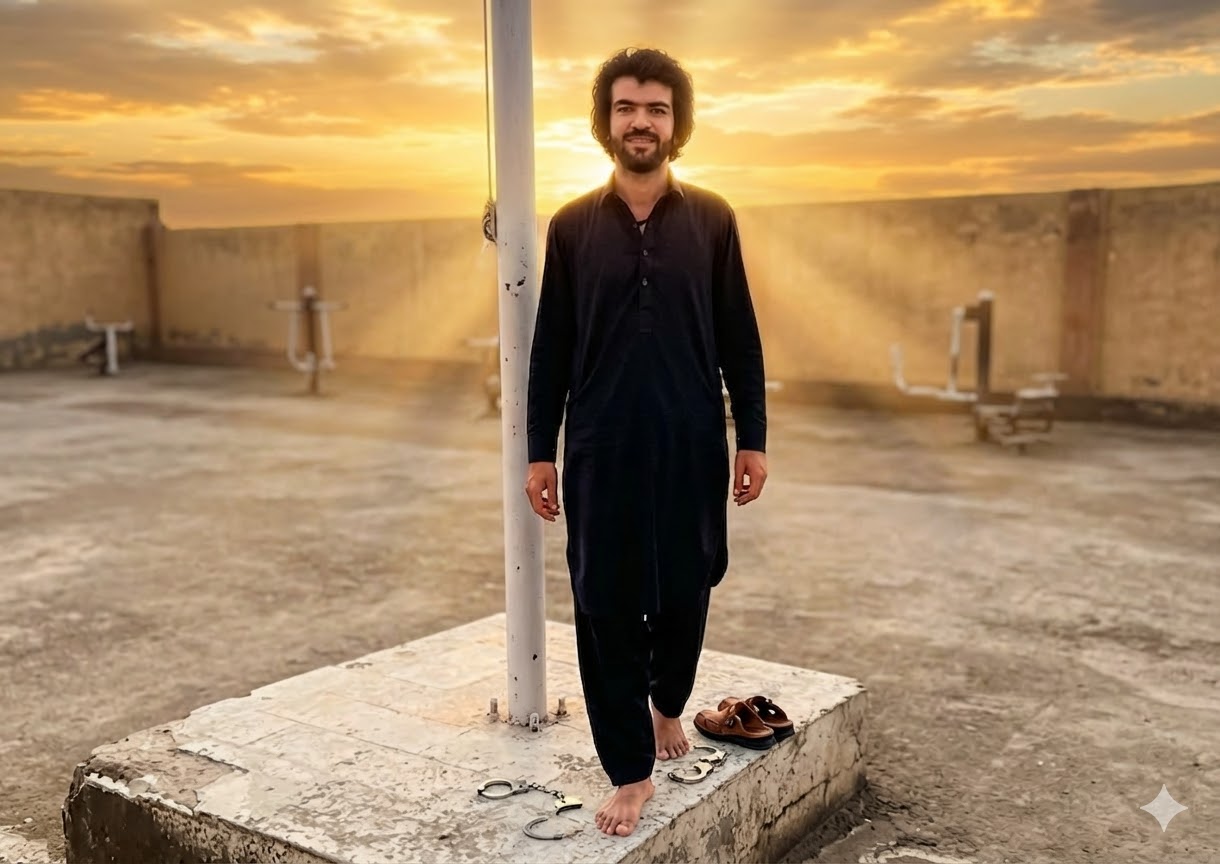
Khodanur Lojei was born on October 2, 1995, in the Shirabad neighborhood of Zahedan, in Iran's Sistan and Baluchestan Province. He was Baluch and Sunni Muslim. In the Islamic Republic, that makes you a double minority, doubly disposable.
He had no birth certificate, no formal education. The state had no file on him. He worked as a plasterer.
But on Instagram, he was alive. He posted videos of himself dancing traditional Baluch dances, loose-limbed and full of joy, and people loved him for it. In a region ground down by poverty and discrimination, he chose to dance.
زندگی او
خدانور لجهای در ۱۰ مهر ۱۳۷۴ در محله شیرآباد زاهدان، در استان سیستان و بلوچستان به دنیا آمد. بلوچ بود و سنی. در جمهوری اسلامی، این یعنی دو بار اقلیت، دو بار قابل حذف.
شناسنامه نداشت. تحصیلات رسمی نداشت. حکومت هیچ پروندهای از او نداشت. گچکار بود.
اما در اینستاگرام، زنده بود. ویدیوهایی از رقصهای بلوچی میگذاشت، سبک و پر از شادی، و مردم عاشقش بودند. در منطقهای که زیر فقر و تبعیض له شده بود، رقص را انتخاب کرد.
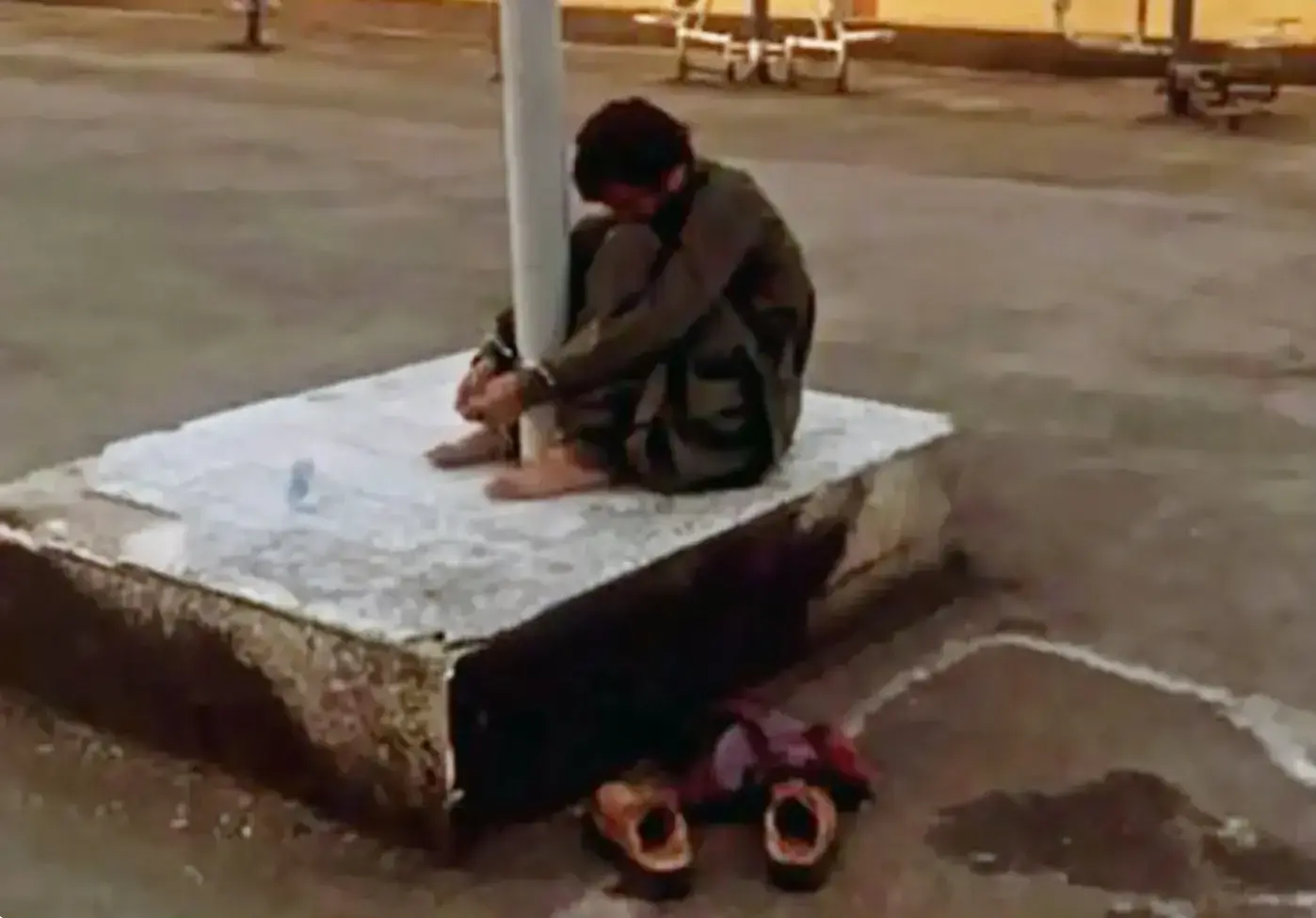
This photograph shows state violence. It is shown here because what was done to Khodanur should not be hidden. The authorities took this photo to humiliate him. History turned it into evidence.
July 2022. After an altercation with the son of a local Basij commander, security agents were paid to arrest Khodanur, beat him, tie him to a pole, and photograph him. He was bound from roughly 2 AM to 7 AM. When he said he was thirsty, they placed a cup of water just out of his reach. The authorities published the photo online to humiliate him. He was held for about a month before his family bribed officials to secure his release.
The photo meant to shame him became the most powerful image of the revolution.
تیر ۱۴۰۱. بعد از درگیری با پسر یک فرمانده بسیج محلی، مأموران امنیتی پول گرفتند تا خدانور را بگیرند، بزنند، به تیر ببندند و عکس بگیرند. از حدود ساعت ۲ شب تا ۷ صبح بسته بود. وقتی گفت تشنهام، یک لیوان آب گذاشتند جلوش، دور از دستش. عکسش را آنلاین منتشر کردند تا خُردش کنند. حدود یک ماه نگهش داشتند تا خانوادهاش با رشوه آزادش کردند.
عکسی که قرار بود تحقیرش کند، قویترین تصویر انقلاب شد.
Bloody Friday, September 30, 2022
On September 30, 2022, after Friday prayers in Zahedan, thousands gathered to protest. They were there for two reasons: the killing of Mahsa Amini in morality police custody, and the alleged rape of a 15-year-old Baloch girl by Colonel Ebrahim Kouchakzai, the police chief of Chabahar. Security forces opened fire with live ammunition into the crowd, and into the prayer site where people were still on their knees.
At least 107 people were killed that day. 17 of them were children. Over 350 were wounded.
Khodanur was shot in the back, kidney, and leg. He was taken to Tamin Ejtemayee Hospital, an IRGC-supervised facility. Doctors refused to operate. They told him he would "heal soon."
He spent his last hours begging a nurse for help, saying he felt lightheaded, that something was wrong. His family stood beside him, powerless. They later said: "They neglected him to death and we could do nothing."
He died on October 2, 2022, his 27th birthday, from untreated gunshot wounds. Surgery could have saved him.
One of his sisters died of a heart attack after learning of his death.
جمعه خونین، ۸ مهر ۱۴۰۱
۸ مهر ۱۴۰۱، بعد از نماز جمعه در زاهدان، هزاران نفر جمع شدند. هم برای مهسا امینی آمده بودند، هم برای تجاوز ادعایی سرهنگ ابراهیم کوچکزایی، رئیس پلیس چابهار، به یک دختر ۱۵ ساله بلوچ. نیروهای امنیتی با گلوله جنگی شلیک کردند. به جمعیت. به محل نماز. به مردمی که هنوز زانو زده بودند.
دستکم ۱۰۷ نفر آن روز کشته شدند. ۱۷ نفرشان کودک بودند. بیش از ۳۵۰ نفر زخمی شدند.
خدانور از پشت، به کلیه و پا تیر خورد. به بیمارستان تأمین اجتماعی منتقلش کردند، بیمارستانی تحت نظارت سپاه. پزشکان جراحی نکردند. گفتند «زود خوب میشود.»
ساعات آخرش را از پرستار کمک خواست. میگفت سرم گیج میرود، یک چیزی درست نیست. خانوادهاش کنارش بودند و هیچ کاری از دستشان برنمیآمد. بعداً گفتند: «با بیتوجهی کشتندش و ما هیچ کاری نمیتوانستیم بکنیم.»
در ۱۰ مهر ۱۴۰۱، روز تولد ۲۷ سالگیاش، بر اثر زخمهای درماننشده جان داد. جراحی میتوانست نجاتش بدهد.
یکی از خواهرانش بعد از شنیدن خبر مرگش سکته قلبی کرد و درگذشت.
What Came After
On the 40th day after his death, people around the world recreated his pose. Led by Mediseh Bathaie, protesters handcuffed themselves to the lampposts of Chris Burden's Urban Light installation at the Los Angeles County Museum of Art. Students tied themselves to poles at the University of Kurdistan in Sanandaj. In Tehran, a young girl in traditional Baloch clothing danced at the foot of the Azadi Tower.
In Chicago, artists with "Chicago For Iran" carved his likeness in ice. In Nazareth, the Israeli artist Benzi Brofman painted him into a mural. The poet Mahdi Ganjavi wrote for him in Words Without Borders. Scholars studied his dance as an act of resistance. His name, meaning "the light of God," became something people whispered like a prayer.
The photo that was meant to break him became proof that they could not.
No one has been held accountable for his death. No one has been held accountable for Bloody Friday. Iran's judiciary continues to shield the commanders responsible.
آنچه بعد آمد
چهلم مرگش، مردم در سراسر دنیا ژستش را بازسازی کردند. به رهبری مدیسه بطحایی، معترضان دستانشان را به تیرهای چراغ مجسمه «نور شهری» در موزه هنر لسآنجلس بستند. دانشجویان در دانشگاه کردستان سنندج خودشان را به تیر بستند. در تهران، دختری با لباس سنتی بلوچی پای برج آزادی رقصید.
هنرمندان «شیکاگو برای ایران» مجسمه یخیاش را ساختند. بنزی بروفمن، هنرمند اسرائیلی، نقاشی دیواریاش را در ناصره کشید. مهدی گنجوی شعری برایش در مجله «کلمات بدون مرز» نوشت. محققان رقصش را کنش مقاومت خواندند. نامش، به معنی «نور خدا»، مثل دعا زمزمه شد.
عکسی که قرار بود خُردش کند، ثابت کرد که نتوانستند.
هیچکس پاسخگوی مرگش نشده. هیچکس پاسخگوی جمعه خونین نشده. دستگاه قضایی ایران همچنان از فرماندهان مسئول محافظت میکند.
Timeline
October 2, 1995Born in Shirabad, Zahedan
July 2022Arrested, tied to a pole, beaten, and photographed by security forces. Held for about a month, released after family bribed officials
September 16, 2022Mahsa (Jina) Amini killed in morality police custody. Nationwide protests begin
September 30, 2022Bloody Friday. Security forces kill at least 107 people in Zahedan, including 17 children, and wound over 350. Khodanur is shot in the back
October 2, 2022Dies on his 27th birthday at Tamin Ejtemayee Hospital after being denied surgery
November 202240th day memorials worldwide. People recreate his pose at LACMA, University of Kurdistan, Azadi Tower
2022-presentNo accountability. Iran's judiciary shields the commanders responsible
تاریخچه
۱۰ مهر ۱۳۷۴تولد در شیرآباد، زاهدان
تیر ۱۴۰۱بازداشت، بسته شدن به تیر، ضرب و شتم، و عکسبرداری توسط نیروهای امنیتی. حدود یک ماه نگهداری، آزادی با رشوه خانواده
۲۵ شهریور ۱۴۰۱مهسا (ژینا) امینی در بازداشت گشت ارشاد کشته میشود. اعتراضات سراسری آغاز میشود
۸ مهر ۱۴۰۱جمعه خونین. نیروهای امنیتی دستکم ۱۰۷ نفر را در زاهدان میکشند، از جمله ۱۷ کودک، و بیش از ۳۵۰ نفر زخمی میشوند. خدانور از پشت تیر میخورد
۱۰ مهر ۱۴۰۱در روز تولد ۲۷ سالگیاش در بیمارستان تأمین اجتماعی، بعد از محروم شدن از جراحی، جان داد
آبان ۱۴۰۱مراسم چهلم در سراسر جهان. بازسازی ژست او در LACMA، دانشگاه کردستان، برج آزادی
۱۴۰۱ تاکنونهیچ پاسخگویی. دستگاه قضایی ایران از فرماندهان مسئول محافظت میکند
They killed the dancer. They could not kill the dance.
رقصنده را کشتند. رقص را نتوانستند.
For Khodanur, and for the 107+ souls of Bloody Friday.
For the 551+ killed during Woman, Life, Freedom.
برای خدانور، و برای بیش از ۱۰۷ جانباخته جمعه خونین. برای بیش از ۵۵۱ کشتهشده جنبش زن، زندگی، آزادی.